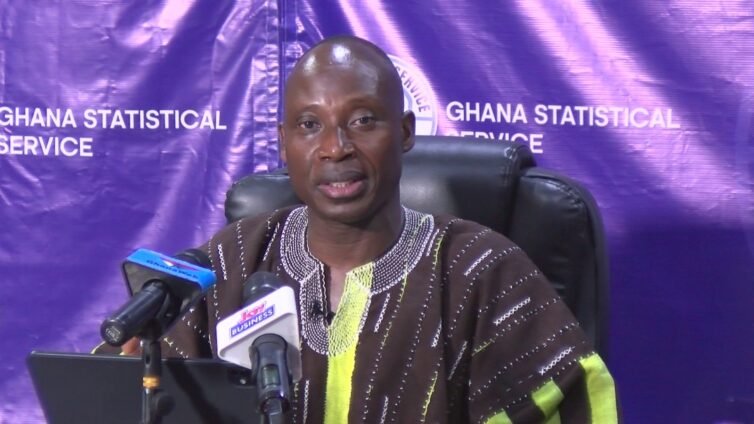

Presenting the headline estimates, Government Statistician Dr. Alhassan Iddrisu revealed that the macroeconomic landscape is benefiting heavily from a combination of sustained expansion and sharply cooling inflationary pressures. A key highlight from the report was the sharp drop in the GDP deflator—which measures changes in the prices of all goods and services produced domestically—falling dramatically to 4.1% from the 23.9% recorded in Q1 2025.
In nominal terms, Ghana’s overall GDP for the first quarter of 2026 reached an impressive GH¢420.4 billion, climbing from GH¢378.0 billion in Q1 2025. Real GDP (at constant prices) stood at GH¢57.4 billion.
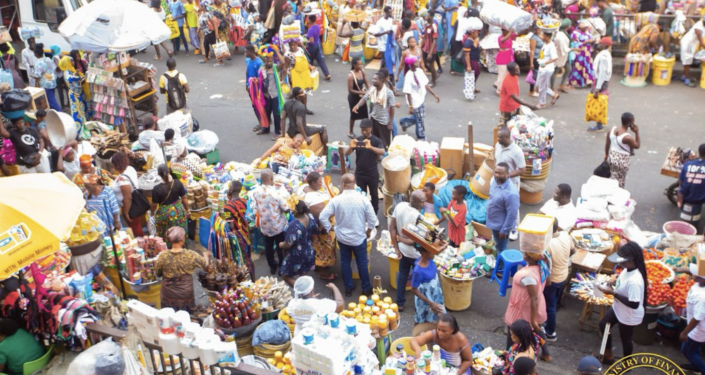
The non-oil sector demonstrated robust resilience, proving that the economic expansion is well-diversified beyond extractive resources. Non-oil real GDP grew by 6.3% year-on-year, pushing nominal non-oil GDP to GH¢410.9 billion.
.jpg)
The services sector retained its crown as the largest engine of the Ghanaian economy, expanding by 7.1% and accounting for nearly half (48.3%) of the overall GDP growth. This expansion was heavily turbocharged by the Information and Communication Technology (ICT) sub-sector, which recorded a staggering 25.2% growth rate—making it the fastest-growing sector nationwide. Transport and storage (13.0%) and retail trade (9.0%) also posted strong gains, though contractions in accommodation and food services (-13.6%) acted as a minor drag.
The agricultural sector experienced a softer expansion, growing by 4.0% compared to 6.6% in the same period last year, although forestry and logging rebounded sharply by 9.0%.
Looking Forward
As West Africa’s second-largest economy continues its steady climb out of its recent fiscal vulnerabilities, these Q1 figures provide major assurance to investors and international observers. With price stability returning and core industrial and digital infrastructure expanding rapidly, Ghana’s economic outlook for the remainder of 2026 remains highly optimistic.
Source: 3news.com